How much does a trade website cost in Ireland?
What Irish tradespeople actually pay for a website in 2026 — from one-off web designers to DIY builders to monthly platforms — and what's worth it.
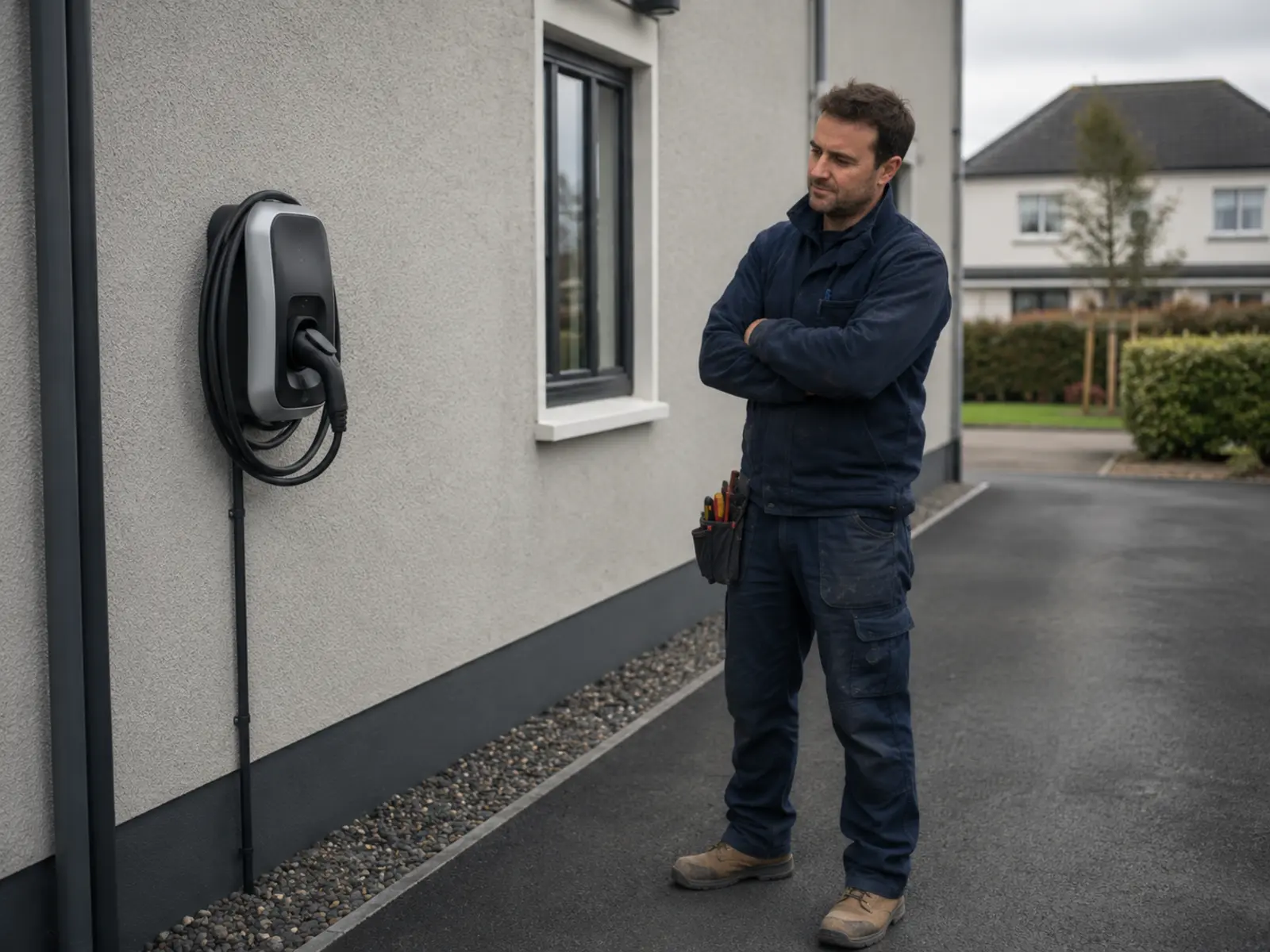
I get asked this almost every week, usually by an electrician or plumber who’s been quoted something that made their eyes water, or who’s been burned by a cheap site that did nothing. So let me give you a straight answer, with real numbers, the way I’d explain it to a mate over a pint.
The honest version is this: a trade website in Ireland can cost you anywhere from nothing to five grand or more. The price tag tells you almost nothing about whether it’ll actually bring you work. That’s the part nobody explains, so I’ll spend most of this post on it.
The typical price ranges in Ireland
Here’s what you’ll realistically be quoted in 2026, depending on who you go to.
One-off custom web designer: €1,500–€5,000+
This is the classic route. You hire a designer or a small agency, they build you a bespoke site over a few weeks, and you pay a lump sum. For a tradesperson, a decent custom build usually lands between €1,500 and €3,000, and a bigger one with lots of pages, a booking system or fancy design can push past €5,000.
The work is often genuinely good. The problem is what happens after launch. You own a nice site, but you’re now on your own for hosting, updates, security and — the big one — getting it to actually rank on Google. More on that below.
Cheap freelancer or DIY builder: €0–€500
At the other end, you’ve got Wix, Squarespace, GoDaddy and the like. You can build something yourself for the price of a subscription, maybe €15–€30 a month, or pay a freelancer on a marketplace €200–€500 to throw one together.
I won’t pretend these can’t look fine. The trouble is that “looks fine” and “brings in jobs” are two completely different things. DIY sites are almost always built with no thought to local SEO, they load slowly, and they sit on a generic domain with no plan to get found. You end up with a digital business card that nobody ever sees.
Template mills: €300–€800
There’s a whole category of outfits that churn out near-identical sites from a template, swap your logo and colours in, and charge a few hundred euro. It’s quick and it’s cheap. It’s also invisible to Google, because a hundred other trades have the exact same site structure and copy. You’re paying for a shell.
Monthly all-in platforms: €50–€150/month
The newer model — and the one I build with — is everything bundled into one monthly fee: the site, the hosting, the domain, the updates, and crucially the local SEO work that gets you found. No big upfront hit, and somebody’s accountable for results, not just for handing you files and disappearing.
The hidden costs nobody mentions
This is where most tradespeople get caught out. The build price is rarely the real price.
- Hosting — usually €5–€20 a month, or €60–€240 a year, and it never stops.
- Domain name — the .ie that makes you look local and legit, around €15–€30 a year.
- SSL and security — sometimes bundled, sometimes a surprise line item.
- Maintenance and updates — plugins break, things go out of date, and a designer who’ll “pop in and change your phone number” often charges €60–€100 an hour to do it.
- SEO — and this is the giant one. A site that doesn’t rank is worthless. You can have the prettiest website in Ireland, but if it’s on page four of Google when someone searches “electrician near me”, it may as well not exist.
That last point is the whole game. I’ve seen lads pay €2,500 for a beautiful site that got them zero enquiries in a year, because nobody told them a website and getting found are two separate jobs. The design is the easy bit. Ranking is the hard, ongoing bit.
Why “cheap” usually costs more
Here’s the maths that catches people out. Say you pay €400 for a template site. Six months in, it’s brought you nothing, so you pay a freelancer to “do the SEO”. That’s another few hundred, maybe a few hundred a month. Then it needs updating. Then it goes down and you can’t reach the person who built it.
Add it up and the cheap site has quietly cost you more than a proper one — and you’ve lost six to twelve months of jobs you’d have won if it had been done right the first time. In the trades, a single decent job — a rewire, a bathroom, a new boiler — can be worth more than the entire year’s website spend. Missing those because you went cheap is the real cost, and it never shows up on any invoice.
I wrote more about turning a site into actual work in this guide on getting more trade jobs in Ireland, if you want to go deeper.
What a tradesperson actually needs
You don’t need a flashy site with animations and a blog you’ll never write. You need a tool that turns “I have a leak” into your phone ringing. That means:
- Mobile-first — most people searching for a tradesperson are on their phone, often standing in a flooded kitchen. If your site is fiddly on mobile, you’ve lost them.
- Fast — if it takes more than a couple of seconds to load, people hit the back button and ring the next fella.
- On your own domain — a proper yourname.ie, not a free subdomain that screams “amateur”.
- A sorted Google Business Profile — for most trades this brings in more enquiries than the website itself. It’s the map pin, the reviews, the phone button. It has to be set up and optimised properly.
- Reviews — Irish customers trust other Irish customers. Getting reviews flowing and shown off is half the battle.
- Local ranking — being the name that comes up when someone in your town or county searches your trade. That’s the entire point. A good website for tradespeople in Ireland is built around this from day one, not bolted on later.
If you want a sense of how this looks for a specific trade, I’ve broken it down for electricians in Ireland, and there’s a city-specific take for anyone working in the capital over on trade websites in Dublin.
How to judge whether it’s worth it
Stop asking “does it look nice?” Start asking “is it bringing me jobs?”
That’s the only question that matters. A website is a business expense, like a van or a set of tools. You’d never buy a van because it looked lovely if it couldn’t carry your gear. Same logic. Judge a site by the enquiries in your inbox and the calls on your phone, not by how slick the homepage looks.
So when you’re weighing up a quote, ask the person:
- Will this rank locally, and how?
- Is the Google Business Profile part of the deal?
- Who fixes it when something breaks, and what does that cost?
- What’s the total cost over a year, not just the build?
If they can’t answer those clearly, the price is irrelevant — you’re buying a pretty thing that won’t earn.
That’s actually why I built Ranksy the way I did. It’s a flat €99 a month — website, hosting, domain, Google Business Profile, reviews and the local SEO that gets you found, all in one, with somebody on the hook for results. The first 60 days are free, there’s no card needed to start, and I only take one tradesperson per area, so you’re never competing with the lad down the road on the same setup.
Whatever you decide, do me one favour: don’t judge a trade website by its price or its looks. Judge it by whether your phone rings. That’s the whole job.